(a 6 minute read)
Have you ever noticed that even while you’re concentrating on one task, part of your mind is somewhere else? Maybe you’re thinking about lunch, a phone call you’ve been avoiding, tonight’s plans, or that project due next week. We tend to think of ourselves as focused or distracted, but I’m beginning to think there’s a better way to describe what’s happening.
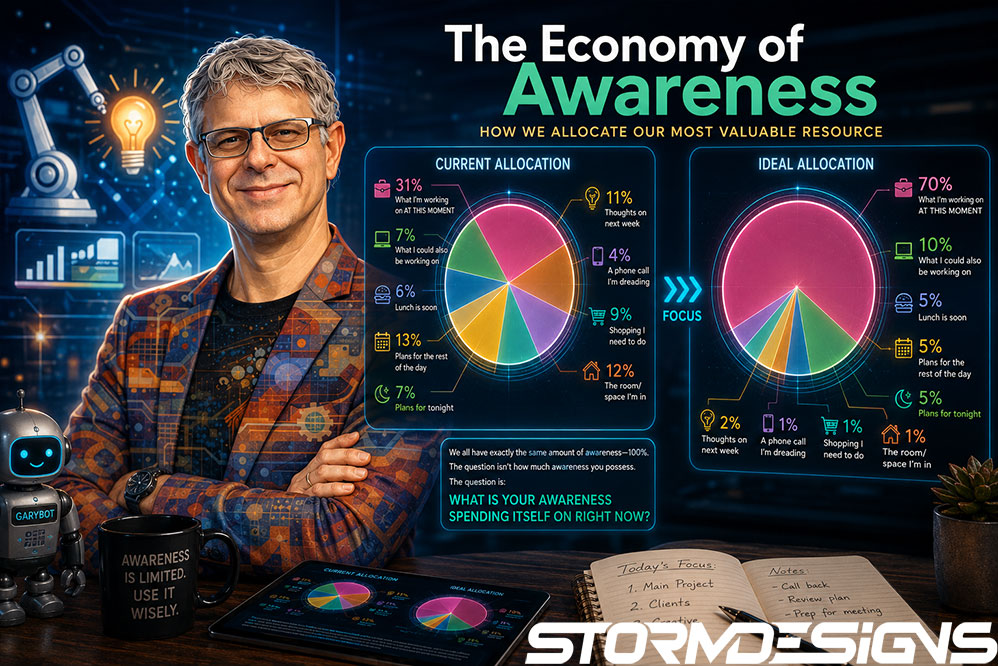
What is your awareness spending itself on right now?
Recently I started sketching a simple idea I call Awareness Allocation. My premise is that each of us experiences 100% of our awareness every waking moment. The interesting question isn’t how much awareness we have. It’s how that awareness is currently divided. Like a household budget, every thought competes for a share of a limited resource.
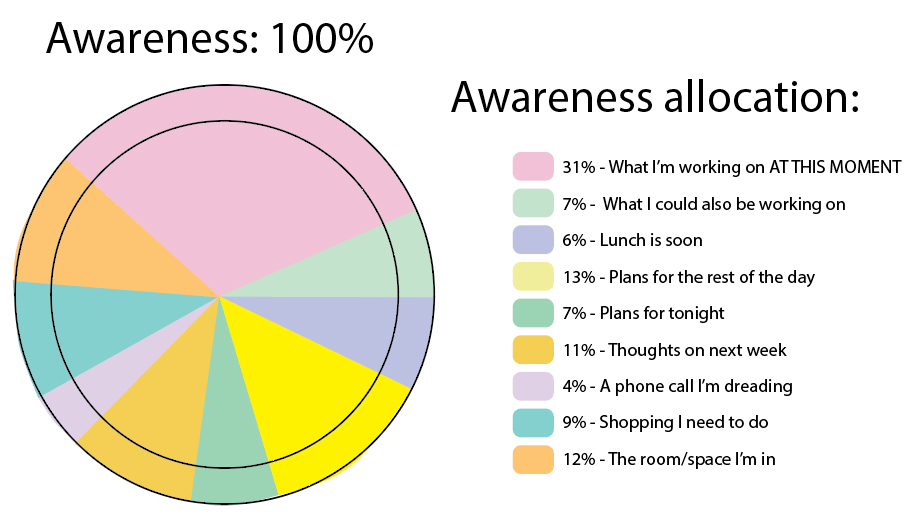
When I visualized that idea as a pie chart, something clicked. During a typical workday, only about a third of my awareness might actually be devoted to the task in front of me. The rest is distributed among future plans, unfinished responsibilities, environmental distractions, and thoughts that quietly compete for attention. None of those thoughts are necessarily bad—they’re simply occupying mental space.
That realization has implications far beyond personal productivity. It changes how we think about websites, marketing, software, and communication. Every extra decision, confusing menu, unnecessary form field, or cluttered page asks visitors to spend a little more of their awareness. Good user experience isn’t just about making something attractive. It’s about respecting the limited attention every visitor brings with them.
The more I work in UX, the more I believe great design is really about reducing unnecessary cognitive effort. Whether someone is navigating a website, reading an email, or deciding whether to contact a business, every moment of confusion quietly withdraws from their Awareness Budget. The easier we make that journey, the more awareness remains for what actually matters: understanding, confidence, and taking action.
I’m still refining this model, and I’d love your thoughts. If you were to draw your own Awareness Allocation right now, what would it look like? Which thoughts deserve more of your attention, and which ones have been quietly borrowing more than they should? Sometimes asking a better question is the first step toward finding a better solution.
Try it Yourself
What is your awareness spending itself on right now?
Take 30 seconds.
Without overthinking it, estimate how your awareness is divided right now.
- ___% Current task
- ___% Future plans
- ___% Worries
- ___% Family & relationships
- ___% Environment
- ___% Other
Do the numbers add up to 100?
Did anything surprise you?
